SEO for a SaaS startup: our first two weeks, in numbers
A new SaaS's first 12 days of SEO in real Search Console numbers: about 6,900 impressions, 4 clicks, 94 pages indexed, and the 30-day plan we would follow again.
On this page
Every startup SEO guide says to wait three to six months. Almost none show what the first two weeks look like, which is when a founder is staring at Search Console wondering if anything works. These are our numbers for auditmatic.app, a new SaaS, from our first impression on 31 October to 11 November 2026.
Day by day: the first 12 days
Here are the daily impressions from Google Search Console. We did not pick a flattering window. The first day has one impression and the next has none.
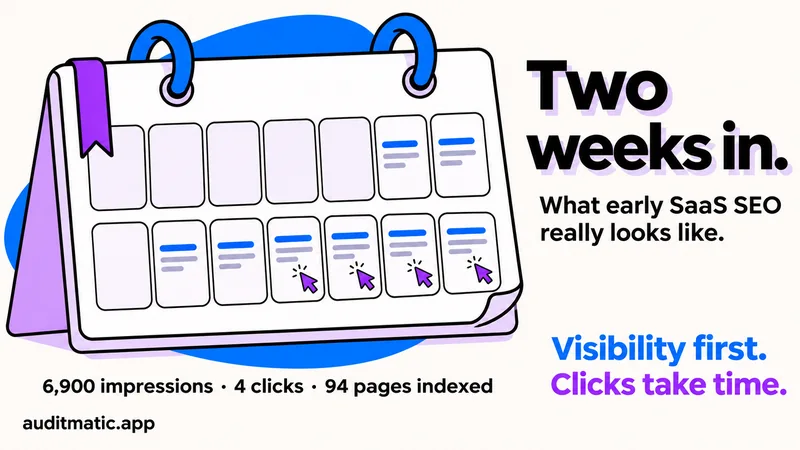
Across those 11 days the site had about 6,900 impressions and 4 clicks. The average position sat between 72 and 83, so almost all of that visibility was on page eight or nine of the results, where few people look. That is normal for a new domain, and it tells you something useful: impressions arrive first.
Impressions come first, clicks come later
The sequence we saw is the one to expect. Google crawls and indexes your pages. It then shows them for searches at low positions, which generates impressions with almost no clicks. Clicks need a position on the first page, and a new site does not get that in the first fortnight.
Four clicks in 11 days is not a signal. Search Console does not list every query, so we cannot say which searches they were, and a click on day five may be one person. If you are tempted to optimise for it, resist.
What we did, in order
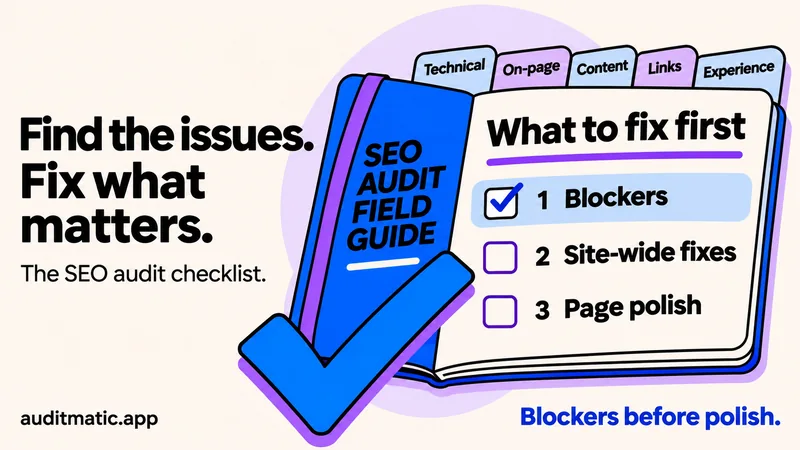
- Audited our own site and fixed the errors first. The first audit scored 96 with five errors, all missing security headers, which one change fixed everywhere. The second scored 99 with none. The method is in our SEO audit checklist.
- Verified Google Search Console and submitted the sitemap, then verified Bing Webmaster Tools and sent our URLs to Bing through IndexNow.
- Published pages that answer one search each: price comparisons, fix guides and setup guides for Claude Code, Codex and Cursor.
- Linked the pages to each other, so every new page had at least one link from an existing one.
- Got our first outside link from a guest post on an indie directory, which Google now lists as a page that refers to our homepage.
We cannot say which of these caused the rise in impressions, and we did not run controls. The audit and the sitemap were done in the same week as everything else.
What indexing looked like
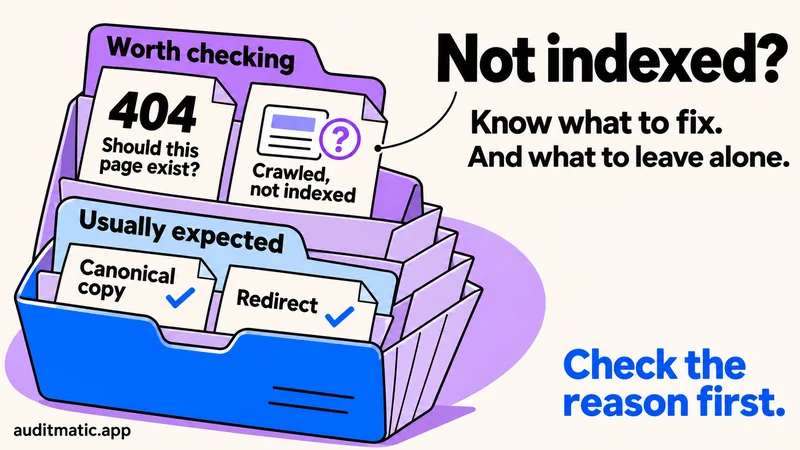
By day 13, Search Console's Pages report showed 94 pages indexed and 206 not indexed. That sounds bad and is not. Most of the 206 were canonical duplicates, redirects and app pages we block on purpose, which we explain reason by reason in why pages are not indexed in Search Console.
New pages were picked up quickly: Google crawled our Codex and Cursor guides within a day of publishing them. One guide was not. A page on getting cited by ChatGPT sat in "Discovered, currently not indexed" four days after it went live, with only one page listed as linking to it. More internal links are the first fix.
What Google says about timing
Google's own wording is more careful than most guides. Its SEO starter guide says some changes take effect in a few hours and others several months, and suggests waiting a few weeks before judging a change. Its help pages say it can take a few weeks for Google to notice a new site, and that crawling can take from a few days to a few weeks. It adds that a crawl request does not guarantee inclusion will happen instantly or even at all. We could not find the popular "three to six months" on a current Google page.
What we would do differently
- Track winnable keywords from day one. We started with broad head terms that no new site can move in a few weeks, so the tracker only ever read "not found". We replaced them with specific searches our pages answer.
- Link new pages when we publish them, not a few days later. The guide that sat in "Discovered" is the one that had the fewest links.
- Read the not-indexed reasons earlier. We spent time worried about the 206 before checking that most were duplicates and redirects.
The 30-day plan we would follow again
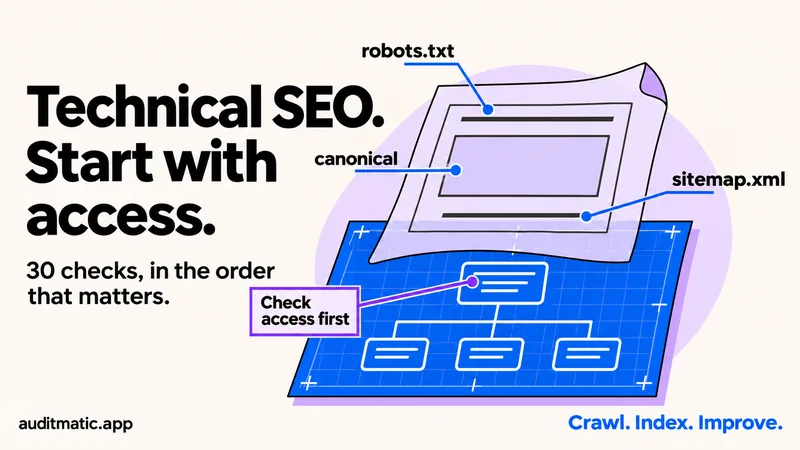
- Week 1: make the site findable. Verify Search Console and Bing Webmaster Tools, submit the sitemap and run a technical audit. Fix anything that blocks pages from search first. Our technical SEO audit checklist lists the checks.
- Week 2: publish pages for specific searches. One page, one question, answered in the first lines. Link each page from two others.
- Week 3: check what got indexed. Use URL Inspection on the pages that matter and ask for indexing once, only after a real fix. Do not resubmit the same address.
- Week 4: read the data. Look at impressions by page and find the queries at positions 8 to 30. Improve those pages before writing new ones, and ask for one link from a relevant site.
What an agent changed for us
We ran the audit loop through an AI agent: it read the audit report, fixed one cause at a time, and we audited again to confirm, which is how the score went from 96 to 99. Tracking 16 keywords every week costs us under 50 cents a month. The setup for Claude Code is one command, and Codex and Cursor take a line each. We wrote it up in how to run an SEO audit with Claude Code, and the plans start at $5 on our pricing page.
Frequently asked questions
How long does SaaS SEO take?
Google gives no fixed time. Expect impressions within the first week or two, and clicks to lag by weeks, until pages reach the first page of results.
Why do I have impressions but no clicks?
Your pages are showing at low positions. Clicks come from the first page. Improve the pages sitting at positions 8 to 30 first.
What should a SaaS startup do first?
Set up Search Console and Bing Webmaster Tools, submit a sitemap, and fix anything that blocks indexing before writing more pages.
Do I need backlinks to start?
They help a new domain. Start with places where your audience already looks, such as directories and communities for your niche.
How many pages should a startup publish first?
Start with the few pages that answer your buyers' most specific searches, such as how your product compares with the usual choice and how to fix the problem it solves. Google's people-first content guidance warns against mass-produced pages, so each one should be worth reading on its own and linked from other pages.
Check your own first week
Run a free audit to see what blocks indexing and what to fix first.